Photograph on CV: Should You Add One to Your Resume?
A former Google recruiter’s full guide to resume photos.
Learn how adding a picture on your resume can impact your chances during CV screens. Included: a deep
analysis of market specifics and cultural expectations.
Emmanuel GendreEx-Google recruiter / Tech resume writerUpdated August 28, 202618 min read
Share
Should you add a photograph on CV? In most regions like the US and UK, the answer is no.
Including a photo on your resume increases the risk of unconscious bias and may lead to
automatic rejection by recruiters to comply with anti-discrimination laws. As a resume
writer for IT and technical roles, I advise most of my clients to avoid pictures unless
culturally expected
in their target region.
Photograph on CV: Problems, Bias, and Legal Risks
Rules on resume photos are evolving globally
I have reviewed thousands of applications from the other side of the desk as a recruiter for tech companies.
Prior to launching TechieCV (tech resume
writing
services), I worked as a Recruiter at
Google. I was in charge of recruiting for the entire EMEA (Europe, Middle East and Africa) region, which is
arguably the most diverse culturally speaking. One of these regional differences was the inclusion (or not) of
a
photo on resumes.
To be frank, I never personally saw this as an issue, but I did witness an evolution in compliance processes,
regulations, as well as a stronger push to reduce unconscious bias in
hiring decisions.
As I tell you all I know about resume photos, you'll note that:
There is a clear global trend towards getting rid of them.
Exceptions are cultural, not operational, but that culture is changing too.
Let’s start with a simple clarification: today, “resume” and “CV” mean the same
thing (your job application document). The former is the worldwide US standard and the latter is its
UK/European counterpart.
There are exceptions (in academia, a curriculum vitae is different), but in this guide, I will use the terms
“resume photo” or “CV picture” interchangeably.
How Resume Photos Influence screening decisions
Adding a photo on your resume might seem like a good idea. After
all, first impressions matter, right? In reality, including a
picture on your CV can actually work against you.
All recruiters are human beings (or at least we think we are). This
means that as soon as you add a photo on a resume, you are
introducing bias into the decision process. That bias can work in
your favor, or against you... But don't take my word for it.
Research on Resume Photos and Bias
Studies show that when a photograph on a CV or resume is included, people make instant judgments based on
appearance (often without even realizing it).
Researchers have found that "attractive"
candidates often get more interview callbacks and even better salary
offers (10 to 20%!), compared to "average looking" candidates with
the same qualifications.
One experiment in Spain showed that the same resume received 24%
more interview invitations when paired with an attractive photo on
a CV versus a less conventionally attractive one.
(If you're curious to learn more about our poor judgment skills,
read the paper below!)
The point is: "unconscious bias" is inevitable. So you have to
decide whether adding a photo on your resume is a gamble you want to
take.
Legal Risks of Including a Resume Photo & Anti-Discrimination
Guidelines
It's not just about you. You have to consider the employer's side of
things too...
A picture on a resume can also reveal details like age, gender,
ethnicity, and other characteristics that hiring managers aren't
supposed to consider. Because of this, companies are being
"discouraged" from letting pictures cloud their judgment.
In the U.S., the EEOC advises against employers requesting a picture on resume submissions to avoid
discrimination claims. The same principle applies in the U.K., France, and many other countries with anti-bias
legislation.
What does this mean for you? If you're asking yourself "should I have a photograph on my CV?", the practical
answer for most tech roles is no.
Many businesses will simply discard resumes with pictures.
Here you go, problem solved!
The "Off-by-Default" Rule: treat your photo as a high-risk element. As a resume writer, my
rule for
clients is to keep the
picture off by default. Only include it if you are 100% sure it is the non-negotiable cultural norm
(see
next section for details).
Photo on Your Resume: Expectations Around the World
But... the issue of whether to add a photo on resume documents is
slightly more complicated than that. Depending on where you plan on
reluctantly going to the office 3 times a week, expectations differ.
I researched standards for 87 worldwide job markets and compiled a list of resume photo
rules by country. I sorted the table below by region:
North & Central America,
South America,
Europe,
Asia,
Oceania and
Africa.
You get a clear verdict (Expected,
Not expected or
Optional) as well as cultural and legal context for each
country.
Resume Photo Expectations in North & Central America
In the U.S. and Canada, including a photo on your resume is a hard no. Anti-discrimination laws like the Civil
Rights Act and the Canadian Human Rights Act are there to make hiring fair, so recruiters
avoid anything
that could bias a decision, including your face.
Further south, though, it's a different story. In countries like Guatemala or El Salvador, adding a
professional photo is still expected, especially for local roles. If you're applying to a multinational
company, though, the no-photo rule might still apply. When in doubt, follow what the job post says or go
without.
Country
Photo Expected?
Notes
🇺🇸 United States
Not expected
Photos are strongly discouraged due to anti-discrimination laws such as the
Civil Rights Act (Title VII) and
EEOC
guidelines. Including a photo may
lead to automatic rejection.
🇨🇦 Canada
Not expected
Photos are not standard and may violate equal opportunity laws like the
Canadian Human
Rights Act.
Best practice is to omit them entirely.
🇲🇽 Mexico
Optional
Photos are common in traditional or local roles, but international companies may prefer resumes
without
photos.
🇬🇹 Guatemala
Expected
It is common to include a professional photo in local job applications.
🇸🇻 El Salvador
Expected
Photos are widely expected on resumes in local industries.
🇭🇳 Honduras
Expected
Applicants typically include ID-style photos in their CVs.
🇳🇮 Nicaragua
Expected
Photos remain standard in traditional sectors.
🇨🇷 Costa Rica
Optional
Some local companies expect photos, but international employers may not require them.
🇵🇦 Panama
Optional
Photos are still relatively common but not strictly necessary.
🇨🇺 Cuba
Expected
Photos are often included in CVs, especially for state and education roles.
🇩🇴 Dominican Republic
Expected
Photos are the norm in resumes submitted to local employers.
🇭🇹 Haiti
Optional
Photo practices vary depending on industry; more common in public sector and customer-facing roles.
Resume Photo Expectations in South America
In South America, photos on resumes are still the norm in many countries. Colombia, Peru, Venezuela, Ecuador,
and others usually expect you to include a headshot, especially for local roles or anything customer-facing.
That said, places like Brazil and Argentina are starting to move away from this, especially in tech or
international environments. There are anti-discrimination laws on the books, like Brazil’s Lei nº 9.029
or Argentina’s Ley de Empleo, but it’s not yet standard to
omit photos like in the U.S.
or Europe.
If you're applying locally, a clean, professional photo is often still expected unless the job ad says
otherwise.
Country
Photo Expected?
Notes
🇧🇷 Brazil
Optional
Photos are common in some industries but not required. Omission is increasingly common in tech. Equal
opportunity is covered by the
Lei nº
9.029/1995, which prohibits discriminatory hiring practices.
🇦🇷 Argentina
Optional
Traditionally expected but now optional, especially in multinationals. The
Ley Nacional de Empleo (24.013) promotes
non-discriminatory hiring.
🇨🇱 Chile
Optional
Photos are often included, though not mandatory. Becoming less common in modern sectors, especially
international ones.
🇨🇴 Colombia
Expected
Photos are still widely expected in most job applications, especially for local employers.
🇵🇪 Peru
Expected
Including a professional headshot is standard practice in local recruitment.
🇪🇨 Ecuador
Expected
Photos are typically required or at least expected across most industries.
🇻🇪 Venezuela
Expected
Resume photos are considered standard, particularly for domestic roles.
🇺🇾 Uruguay
Optional
Photos are sometimes included in local CVs but not universally expected.
🇵🇾 Paraguay
Expected
Photos are typically expected on resumes for local job applications.
🇧🇴 Bolivia
Expected
Photos are typically included in CVs, especially in traditional or administrative sectors.
🇬🇾 Guyana
Optional
Resume formats vary; photos are sometimes included but not universally required.
🇸🇷 Suriname
Optional
Photos may be included depending on role and employer, but there’s no formal expectation.
Resume Photo Expectations in Europe
In Europe, it really depends where you are. In Western Europe (places like Germany, France, and Spain), it’s
still fairly common to include a photo in your CV, even though it's not required by law. In Northern Europe
(Sweden, UK, Netherlands), it’s the opposite: photos are usually left out to avoid bias, and
anti-discrimination laws like the Equality Act or Dutch Equal Treatment Act
back that up.
In Eastern and Southern Europe (Hungary, Romania, Italy), a photograph on your CV is still expected in many
industries, especially traditional or public-facing roles.
If you’re applying to a multinational, you’re generally safe skipping the photo. If it’s a local role, check
the norms or just look at what other people in the region are doing.
Germany: the photo on a Lebenslauf
Germany is the market people ask me about most. The traditional German application document is called the
Lebenslauf, and for decades it came with a Bewerbungsfoto: a studio
headshot, top right, taken by an actual photographer. Today, many old-school hiring managers still expect
it.
However, the law has changed. The
AGG (the German equal
treatment act) has been in force since 2006, and it makes appearance-based decisions a liability for
the employer. It means that no German company can ask you for a photo even though they might still expect
it.
Here’s how I advise you to deal with this ambiguity: use a photo for traditional companies
(banks, insurers, law firms, family-owned Mittelstand companies), and remove it if you’re applying to
a tech company, a startup, or a US firm with an office in Germany.
France: still common, no longer expected
CV photos in France are one step further along the same road. You can still find pictures on most French
CVs, but these are gradually disappearing and employers do not expect them anymore.
The CV anonyme experiment came out of France precisely because the
government wanted to measure how much a name and a face impacted resume screens, and the Labor Code
discourages the practice.
The bottom line is that nobody will reject you for including one. Nobody will notice if you don’t. In
tech, most French candidates I see now leave it off.
Country
Photo Expected?
Notes
🇩🇪 Germany
Optional
Traditionally expected, but now optional. Photos are common on Lebenslauf unless applying to global
firms.
Governed by the
General Equal Treatment
Act (AGG)
🇫🇷 France
Optional
Still widely included, but legally not required. The
Labour Code discourages any discriminatory practices
during hiring.
🇪🇸 Spain
Optional
Often included; many local employers expect a photo, but it's not mandatory by law.
🇮🇹 Italy
Optional
Photos are common, especially in local companies. The Italian Privacy Code protects personal data
during
hiring.
🇵🇹 Portugal
Optional
Photos are common but not obligatory. International employers may prefer resumes without.
🇵🇱 Poland
Optional
Often expected in local companies; optional but frequently included.
Often included in local applications, though not mandatory.
🇭🇺 Hungary
Optional
Photos are commonly included, especially in local and traditional industries.
🇷🇴 Romania
Optional
Still common, but practices are shifting depending on company type and industry.
🇷🇺 Russia
Expected
Photos are commonly expected in Russian resumes, especially for local roles.
Resume Photo Expectations in Asia
Asia has some of the strongest expectations when it comes to resume photos.
In countries such as Japan, China, and South Korea, a resume photo is still the norm, and leaving it out might
even hurt your chances in more conservative industries.
Places like India, Malaysia, and Singapore are more flexible now, especially in international environments or
modern industries. Some countries are just starting to move away from photos, but overall, tradition plays a
big role.
If you're applying locally, you’ll probably want to include one unless you’re specifically told not to.
For global or startup roles, check the company culture first: they often prefer a resume without a picture on
it, in order to reduce the risk of bias.
Japan: rirekisho vs shokumu keirekisho
Japan is the one country where not including a photo will get you rejected. To add complexity, there are 2
documents to send when applying for jobs in Japan: the rirekisho (履歴書) and the
shokumu keirekisho (職務経歴書).
The rirekisho photo is a must because the document is a standardized form with a picture box. The shokumu
keirekisho is the free-form career history (the equivalent of the English resume), and it does not require a
photograph.
Most companies require both documents, so you will need to add a headshot.
Country
Photo Expected?
Notes
🇯🇵 Japan
Expected
Required for traditional resumes (rirekisho | 履歴書) and often leads to rejection if missing, especially
in conservative industries. For the Shokumukeirekisho (職務経歴書) it is however optional.
🇨🇳 China
Expected
Professional headshots are standard, especially in Chinese-language CVs. Less expected in tech/startup
sectors.
🇰🇷 South Korea
Expected
Still widely expected, though new movements call for photo-free resumes to reduce bias.
🇮🇳 India
Optional
Traditionally common, especially in local formats. Now optional in MNCs or startups following global
standards.
🇵🇭 Philippines
Expected
Common for local employers. International companies are more flexible and may not require it.
🇻🇳 Vietnam
Expected
Photos are typically expected, especially for public-facing or government roles.
🇹🇭 Thailand
Expected
Generally expected in traditional companies. Modern firms may be more relaxed.
🇲🇾 Malaysia
Optional
Becoming less common. Most MNCs and startups do not expect it, but some local firms still prefer a
photo.
🇮🇩 Indonesia
Expected
Photos are often included in resumes for local roles, especially in admin or service jobs.
🇸🇬 Singapore
Optional
Multinational companies tend to avoid photos due to fair hiring practices (TAFEP
guidelines), but some local
firms still expect them.
🇵🇰 Pakistan
Optional
Common in traditional CV formats. Becoming more optional in tech and private sectors.
🇧🇩 Bangladesh
Expected
Photos are typically expected on resumes for most local job applications.
🇱🇰 Sri Lanka
Expected
Usually included in traditional CVs. More flexibility in startups or foreign firms.
🇳🇵 Nepal
Expected
Photos are a standard part of most resume formats used locally.
🇭🇰 Hong Kong
Optional
Depends on employer. International firms often discourage photos to align with global fair hiring
practices.
🇹🇼 Taiwan
Expected
Still common in traditional industries and when using Chinese-language resumes.
🇦🇪 United Arab Emirates (UAE)
Expected
Photos are commonly requested, especially in roles involving customer interaction.
🇸🇦 Saudi Arabia
Expected
Photos are typically expected, though exceptions exist in multinational firms.
Resume Photo Expectations in Oceania
In Australia and New Zealand, don’t include a photo. It’s not just a trend. It's backed by anti-discrimination
laws like the Fair
Work Act in Australia and the Human Rights Act
in New Zealand. Recruiters
are trained to ignore appearance and focus on
skills.
In the rest of Oceania, it’s a bit more relaxed. Places like Fiji, Samoa, and Tonga may still expect a photo
(especially for roles that are public-facing) but it’s not a must unless the job post specifically asks for
one.
Photos are avoided to comply with the
Human Rights Act 1993,
which protects against discrimination during hiring.
🇵🇬 Papua New Guinea
Optional
Photos may be expected in certain government or administrative roles, but not required in all
industries.
🇫🇯 Fiji
Optional
Including a photo is common for local positions but not always necessary for international employers.
🇸🇧 Solomon Islands
Optional
Resume photo expectations vary depending on industry and role. Local employers may still prefer it.
🇻🇺 Vanuatu
Optional
Including a photo is not required but may be expected for roles in education or tourism.
🇼🇸 Samoa
Optional
Some employers expect a photo, especially for customer-facing roles, though it's not mandatory.
🇹🇴 Tonga
Optional
Photos may be included in local resumes, depending on the job type and organization.
🇲🇭 Marshall Islands
Optional
Photo requirements vary, but they are generally not strictly enforced.
🇲🇵 Northern Mariana Islands
Not expected
As it is a U.S. territory, most employers follow U.S. practices, meaning photos are generally
discouraged.
Resume Photo Expectations in Africa
In Africa, resume photo expectations vary a lot depending on the country and the type of job you're applying
for.
In North and Southern Africa, especially in Egypt, Morocco, and Tunisia, employers generally expect a
photograph on your CV, often attached in a formal layout.
In contrast, countries like South Africa lean toward global standards and discourage photos to avoid bias.
Across the rest of the continent, it’s a mixed bag. Some industries still ask for a photograph in your CV,
especially in government, education, or customer-facing roles, though international companies are increasingly
moving away from the practice. If you're unsure, skip the photo (unless it's clearly requested).
Country
Photo Expected?
Notes
🇿🇦 South Africa
Not expected
Photos are discouraged due to employment equity laws. Recruiters often remove them before review.
🇳🇬 Nigeria
Optional
Photos are sometimes included, especially for traditional sectors, but not required in tech or modern
companies.
🇪🇬 Egypt
Expected
Resume photos are common and often requested by local employers.
🇰🇪 Kenya
Optional
Photos are optional but can be expected in public-facing or government roles.
🇬🇭 Ghana
Optional
Including a photo is common but not mandatory. Global employers may prefer resumes without photos.
🇪🇹 Ethiopia
Expected
Local companies typically expect a passport-style photo in resumes.
🇹🇿 Tanzania
Optional
Photos may be expected in education or public service but are optional overall.
🇺🇬 Uganda
Optional
Photo expectations vary by industry; common in administrative and public-facing roles.
🇲🇦 Morocco
Expected
Resume photos are standard and typically expected by local employers.
🇹🇳 Tunisia
Expected
Professional headshots are standard practice in most Tunisian job applications.
🇨🇲 Cameroon
Expected
Photos are commonly included in applications, especially for traditional companies.
🇸🇳 Senegal
Expected
Including a photo is common in the majority of CVs, especially in French-speaking West Africa.
🇿🇼 Zimbabwe
Optional
Photo expectations vary by sector; often omitted in modern CV formats.
🇲🇿 Mozambique
Expected
Photos are often required for local government or education roles.
🇷🇼 Rwanda
Optional
Photos are sometimes expected depending on the role, but not universally required.
Hopefully, you're starting to see the trend here:
most countries accept CVs without a photograph, and those that do
are starting to move away from resume photos anyway.
Other Reasons Not to Include a Photo on a CV
It’s not just about bias. As a recruiter, I found that resume photos made my job harder.
Does a Photo Actually Break the ATS?
Most companies use Applicant Tracking Systems (ATS) to filter resumes before a human even sees them. Since
these systems are
designed to parse text, adding a resume photo or picture on resume disrupts formatting and can prevent proper
parsing, meaning your application might be discarded automatically.
It means that you might be getting automatically rejected by a piece
of software, simply for adding a photo.
(To learn more about that, check my article on
How ATS Work).
Do not take my word for it. Run the version of your resume that has the photo on it
through the free ATS checker.
You’ll see for yourself whether your photo breaks the ATS!
So Who Actually Rejects You: the ATS or the Recruiter?
There’s a statistic going around saying that “88% of resumes with a photo get
automatically rejected”. I have never been able to find where that number comes from,
and having screened resumes
for years, I do not believe it.
The truth is probably more nuanced: it affects your ranking and searchability.
When parsing your resume, ATS analyze its text, classify your skills & experience, and pattern-match
with their requirements. If a photo breaks text parsing during your application, you will be buried under
everyone else.
Most ATS can now score candidates against an open role, so it might rank you lower. More
importantly, your profile won’t show up when they search through their database.
What this means is that if you apply to competitive companies, you are missing out on opportunities. Less
attractive companies receive fewer applications and will most likely read every resume that gets in, whether
the profile was correctly copied or not.
Why Resume Photos Waste Valuable Space
Recruiters spend an average of 7 seconds skimming a resume.
They are going to try and locate key information on the page
quickly. This is why you usually want to stuff your 1st page with
your "Best Of" (Profile Summary, Technical Skills, Education, Most
Recent Job).
Adding a headshot or photo on a CV usually takes up a lot of space
that could be better used.
You can think of it as adding useless information in the "Above The
Fold" content of a website's landing page. It's not going to convert
well.
How to Get Your Resume Photo Right
Here's how to make sure it is professional
You probably got the general idea by now: most regions do not require resume photos, and the few more
conservative areas are starting to move away from them. This being said, if you're in a market where it's
still expected and you're committed to adding a photo to your CV, it’s worth making sure it doesn’t
hinder your chances.
This section is about how to nail it, if you must do it!
Guiding principles for resume photos
You do not need a professional headshot: follow these simple best practices for a resume photo.
Photo Rules
Use a neutral background, plain wall, soft lighting, no clutter. Branded office settings
are okay if they look intentional (and if your current company name bears credit).
Wear what you'd wear to an interview. That means no hoodies, gym tanks, or party outfits
in your picture on the resume.
Frame it like a headshot. Face the camera, look natural, and skip the weird selfie
angles!
Keep your expression professional but approachable. You’re not posing for a passport, but
it’s also not a dating app either. You can pose with a "measured" smile.
No heavy filters or edits. The photo on your CV should reflect how you actually show up
at work.
Picture on Resume: Good and Bad Resume Photo Examples
Not sure what kind of resume photo to use? These examples show what makes a professional
photo in your CV work, and what gets it thrown out.
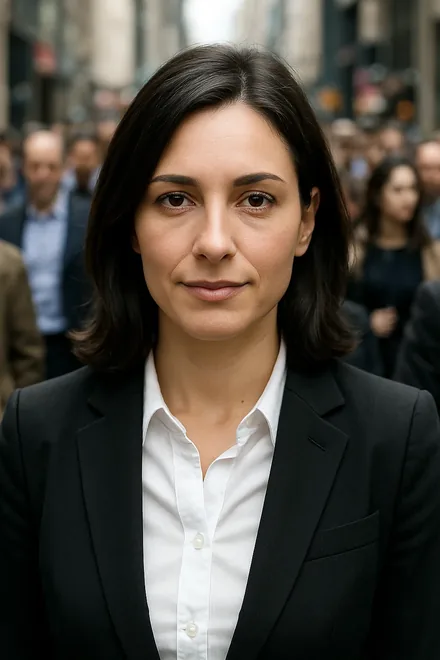
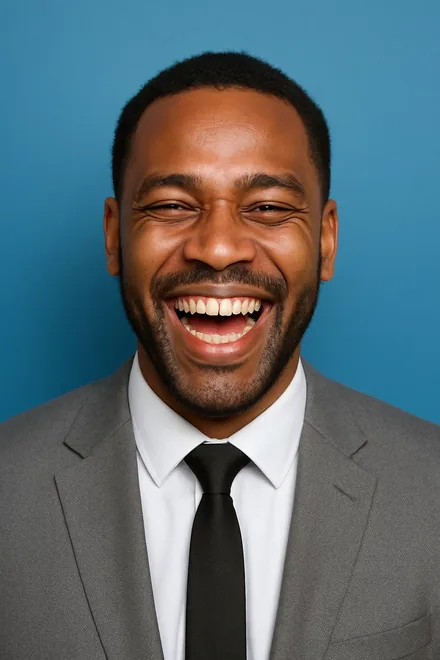
Avoid cluttered or distracting backgrounds.Dress the same way you would for an interview.You can smile, but do not overdo it.Avoid filters, beautify tools, or edits.No selfies. Keep your angle straight and centered.This is how a great resume photo should look.
What Should You Wear in a CV Photo?
Here’s a simple rule: wear what you would wear to the interview for that specific job. A suit is the
safest resume photo outfit and should be the standard for most jobs or traditional industries, such as
finance, consulting, etc… “Business casual” attire is also fine, and even recommended for
industries like tech.
Use simple and dark color arrangements rather than flashy tones, so as not to distract the reviewer. You
can, however, add more vivid colors to the background (blue, yellow, etc…) though you should avoid
red or black which can carry negative connotations.
How to Take a CV Photo Without a Photographer
You do not need a studio. You need a window, a white wall, and someone to hold the phone.
Stand a couple of metres in front of a plain wall so you do not cast a shadow onto it. Make sure that the
window is in front of you, never behind you.
Have someone take the photo from two metres away, then crop the frame. A phone held at arm’s length
distorts your face, which is why selfies look wrong.
Should You Use an AI Headshot on Your CV?
An increasing number of candidates use AI-generated CV photos. Here’s my take on whether you should do
it, as a recruiter.
A resume is required to represent you accurately. That’s of course true for your skills and
experience, but so should it be for your photo. The issue with using an AI headshot on your resume is that
it technically isn’t you despite how impressive the technology has become.
Of course, recruiters are not supposed to make a screening call based on a photo, but it is the fact that
you are technically misrepresenting yourself which causes ethics issues. If your
AI-generated photograph looks real, it probably won’t cause any issue, but if the reviewer can tell it
is AI, you might get rejected for it. Basically, there’s much more downside than upside here, so
I would recommend against using AI for your resume picture.
CV Photo Size, Format and Placement
If you have decided to include a photo on your resume, its placement and size should be right. You
wouldn’t believe how many “creative” CV photo placements and weird sizes I’ve seen
over the years. Headshots taking an entire first page or pictures at the start of every page…
I’ve seen it all, and correct size and placement isn’t obvious to everyone.
What Size Should a CV Photo Be?
Let’s start with the most important attribute, and the easiest to get wrong: the size
of your resume photo. There isn’t a universal size, and standards depend heavily on markets. Use the
table below to find the correct CV photo size, based on where you’re applying.
Format
Size (300 DPI)
Where it is used
🌍 Passport format
35 × 45 mm413 × 531 px
Safest. The default anywhere a photo is expected. It is the ICAO passport size,
used by every EU country plus the UK, Japan, Korea, Australia and 80 others.
🇩🇪 German Lebenslauf
45 × 60 mm531 × 709 px
Germany and Austria, where the convention is deliberately larger than a passport photo
🇯🇵 Japanese rirekisho
30 × 40 mm354 × 472 px
Japan is the only country with an official resume photo size standard, set by JIS and the Ministry
of Health, Labour and Welfare.
One thing worth knowing, because no other guide says it: outside Japan,
none of these is an official standard. They are passport specifications that people
borrowed for their CVs. That is why you will see slightly different numbers everywhere, and why being a
couple of millimetres off has never cost anyone an interview.
Where Do You Put the Photo on a CV?
When it comes to resume photo placement, you’ve got 3 valid options: top-left,
top-right or center. Your CV photo should be part of your header /
personal information section alongside your contact details. Don’t place it lower on the page or
within other sections (profile summary, etc…).
Top leftSafest. It will be seen first,
before your name, so keep it small.Top rightStandard for Germany and Japan.CenterWorks on a creative CV. Wastes some first-page
space because personal information goes below.Sidebar: avoidCauses ATS compliance issues (because of
the sidebar, not the photo).
Use a Photo for LinkedIn Instead
As explained above, in most cases a photo shouldn’t be included in your resume. However, recruiters may
still want to know what you look like. Maybe not during the first screen of your resume, but before giving
you a call or welcoming you for an interview. We're all human, and we often want to "put a face to the
name".
So if you're set on sharing your appearance, skip the picture on your resume and post a professional resume
photo on LinkedIn instead. It gives you the same visibility but with fewer risks. Post a headshot taken in a
professional setting (bonus points if it’s during a public speaking event), and the job is done!
Personal Branding Beyond a Resume Picture
Rather than having a hiring decision be made on a single photo,
LinkedIn gives you the opportunity for 360-degree personal branding.
You can control the narrative and add much more info about yourself
than a single photo would ever convey.
Yes, this may cause bias, but if done well, it’s likely to work in
your favor.
What Your LinkedIn Photo Should Actually Look Like
LinkedIn requires at least 400 × 400 pixels and will accept up to 8MB for a photo file. It
automatically crops the frame to a circle, which you need to account for. Center your face and leave
background space around your head.
The rules from the section above still apply: use a plain background, take a real photo (no AI), and dress
for the job you want. The one difference is that LinkedIn is “warmer” than a resume, so
you’re allowed to be more expressive.
Bottom Line: Should You Include a Picture on Your CV?
Conclusion: you should probably skip the picture on your CV
If you’re applying for a tech role or any job in markets like the
U.S., U.K., Canada, or Australia, skipping the photograph on CV
is the smart move. This will help prevent bias, avoid legal risks,
and keep your resume clean and professional.
Let your skills, experience, and accomplishments do the talking, and
use your LinkedIn profile for personal branding instead. In today’s
job market, a CV without a photograph isn’t just acceptable. It’s
expected.
What's next?
How to pass ATS Screens
I mentioned in this article that keeping photos off your CV is a key step for ATS
optimization. However, that's only the tip of the
iceberg when it comes to passing robot screens.
To stop your application from disappearing into the "black hole," you need to understand
How ATS work → and follow the checklist there!
Frequently Asked Questions
No, it is generally not illegal for you to include one. However, in regions like the US, UK, and Canada,
anti-discrimination laws make it a major liability for employers.
To protect themselves from potential lawsuits regarding unconscious bias, many tech
companies have internal policies to automatically reject any application that contains a photo.
The data is a double-edged sword. Research shows that "conventionally attractive" candidates can see a
24% increase in callbacks.
However, as a tech resume writer, I advise against it. For every recruiter who likes
your
photo, another may reject you based on age, gender, or ethnicity. In a high-stakes job search, you want
to
eliminate variables you can't control.
You should only include a photo if you are applying in a region where it remains a rigid
cultural
norm. In some Asian and European markets, local firms still view a headshot as a standard
part
of a professional profile.
My "Off-by-Default" rule: If you are applying to a modern multinational or a remote-first startup, skip
the photo. Only add a photograph to your CV if you are 100% certain that local tradition makes it
non-negotiable for that
specific employer.
If you've determined a photo is necessary, it should go at the top, typically near your name and contact
info. Top-left or top-right is fine, just don’t let it take over the page.
Think of it like a profile image in a bio section: subtle, professional, and out of the way of the
real content, your technical experience.
Use 35 × 45 mm, the passport format. It is the size almost every market defaults
to, and it is the safe answer if you are not sure.
Two exceptions: a German Lebenslauf uses a larger 45 × 60 mm, and a Japanese
rirekisho uses 30 × 40 mm, which is the only one of the three that is set by an
actual standard. Too big and it looks like you are applying for a modeling job, so keep it proportional
and
aligned with your header.
Absolutely! Assuming your LinkedIn photo is professional. A clean, friendly headshot works across
platforms and helps with visual consistency if a recruiter looks you up online.
Just make sure the photo in your CV isn’t overly compressed or grainy. High resolution is key.
Use color. A black-and-white photograph on your CV can look artistic, but it is often beside the point
in
a technical context. A neutral color headshot with good lighting is always your safest bet.
Include shoulders. A close-up of just your face can feel intense or like a passport scan. A proper
resume
photo should show your head and upper chest, essentially a standard professional headshot crop.
Yes, but only if it’s clean and intentional. A CV picture taken in front of a company banner or
professional office backdrop can work well, especially if it adds "prestige" by associating you with a
well-known tech brand.
Yes. If the employer asked for it in writing, send it. You are not creating the bias risk, they already
accepted it, and ignoring a stated requirement is the one thing that will definitely get your
application set aside.
Follow the rules in this guide, keep it small and professional, and put it in the header. Then move on.
Decide based on the company, not the country. A US or UK headquartered company applies its own hiring
policy globally to every office it has. This also means that a recruiter for a role in Germany could be
based in the UK, therefore screening you against global standards rather than local.
There are obvious exceptions for which a photo is paramount. Acting, modeling and any role in which
your physical appearance is your main tool require a photo. In some countries, add hospitality,
aviation cabin crew, luxury retail and front of house, where the role is customer facing.
Use a non-distracting color, and the safest tones for that are light grey or off-white.
Free resume review
A recruiter screen, but with feedback
You applied to hundreds of jobs: no result. Companies won’t give you
feedback, so you’re stuck in a loop. Rejections will keep coming until you know
what’s wrong.
Let’s break this cycle today!
I’ll screen your resume the same way I did at Google.
You’ll get:
Your resume sections and content scored.
A clear list of what to improve, why, and how.
Behind the scenes secrets on the screening process.